Founder
Curious about the human condition, without the labels.
I’ve spent the last 25+ years listening to people. Their stories, their relationships, the things that have happened to them, the things they’ve never told anyone else, and the thoughts and behaviours they don’t always understand themselves.
And I think that’s probably where everything I’ve built has come from. Not really from wanting to start businesses, but from being endlessly curious about people - why we think the way we do, why we behave the way we do, what shapes us, what gets in our way and, ultimately, what helps us live better lives.
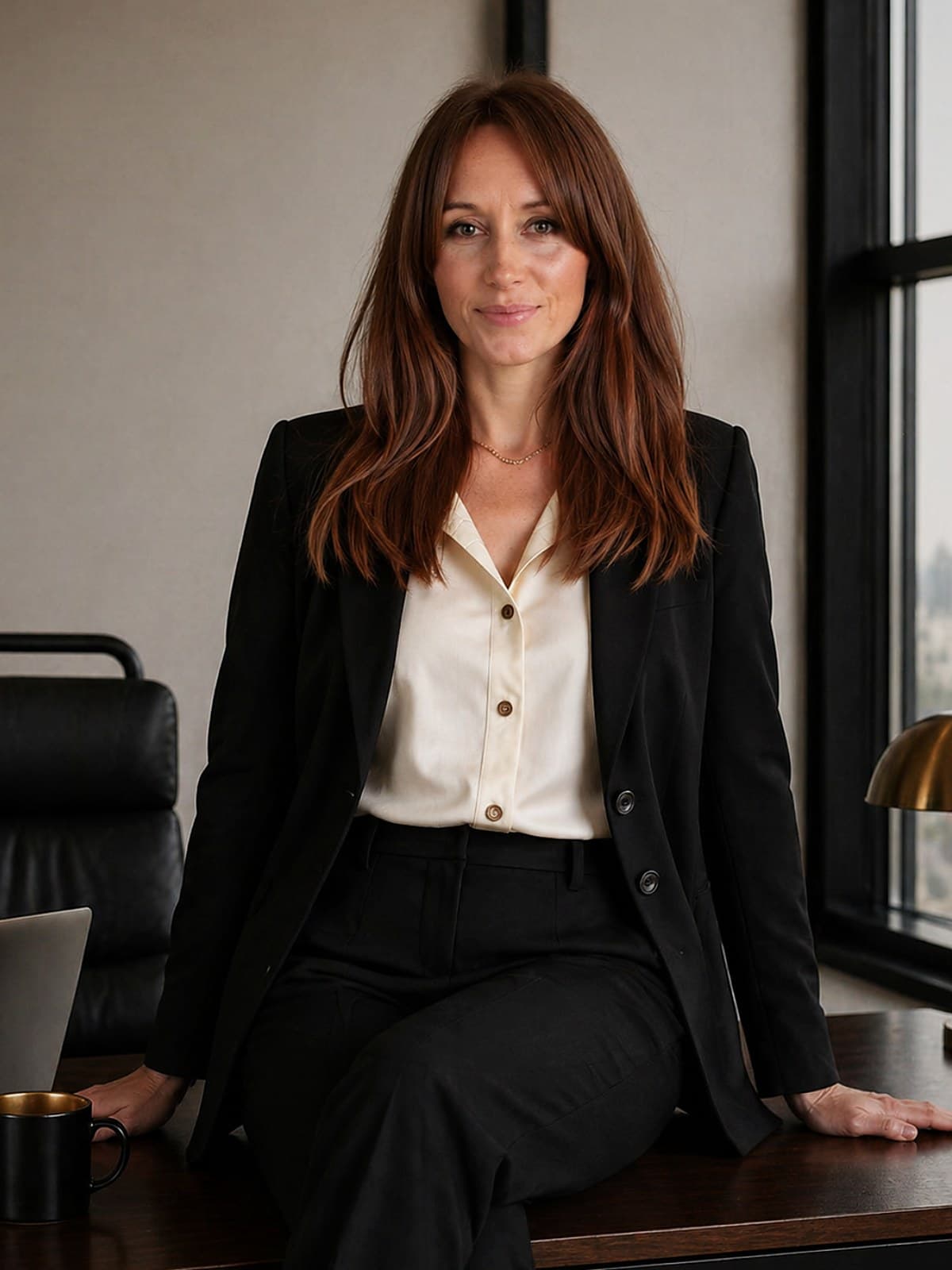
A little about me
I started working in mental health in 2001, in the north of England - Carlisle to be exact - back when nobody was really calling any of this wellbeing. Twenty-five years later, I’m still here. Still fascinated by the human condition and still curious about what makes people who they are.
I’ve seen a lot, been told a lot and experienced a lot. There genuinely isn’t very much that shocks me anymore. But what I have always considered a huge privilege is the trust people place in me. People have told me things they have never told another living soul and, often, if you tell me enough about your life, I can begin to see how you learned to think the way you do - and, in turn, why you might feel and behave the way you do now.
I see patterns in people, in thinking, in relationships and in behaviour. Without sounding egocentric, I do think I have a gift for it. Being able to use that to help someone understand themselves, change something, or simply make life feel a little easier has probably been the greatest privilege of my career.
I’m also not a huge fan of labels or diagnoses. They have their place, of course, but people are far more complicated than a collection of symptoms. Our biology, histories, relationships, personalities, experiences and environments all matter. Fundamentally, I believe we are all by-products of our own very individual biopsychosocial lives, and I’m much more interested in understanding the person underneath all of that.
In 2015, I started my own coaching consultancy, and oddly, part of that came from dating a Goldman Sachs banker. Coming from Carlisle, a bank was somewhere on the high street where you got your money out for a Saturday night, so I genuinely couldn’t understand why somebody would voluntarily work 20-hour days.
When he told me he thought I could help people in his industry, I took a leap and started focusing more of my work on successful, high-performing people - particularly those achieving at enormous personal cost. In all honesty, I was fascinated by them. Why did they do it? What made someone want that kind of life, and what drove them to keep going when, from the outside, they already had more than enough? It was really just the same curiosity I’d always had about people, only now I was looking at it through the lens of success and performance.
Around the same time, I began running Minds@Work, a network for some of the country’s leading workplace wellbeing professionals, including Geoff McDonald, Sir Ian Cheshire, Lord Stevenson, Brian Heyworth and Poppy Jaman, who was CEO of what was then the City Mental Health Alliance, now MindForward Alliance.
I later sat on the advisory board of Mad World Forum and the InsideOut List alongside Rob Stephenson, and co-founded Thrive in the City - more than 80 free wellbeing events taking place across around 20 corporate venues in London, all in one day. The Mayor of London even said some lovely things about it. It was an extraordinary thing to be part of and, from memory, complete logistical chaos. I have been retained by a magic circle law firm for over 6 years, and work alongside organisations such as Mercedes F1 Team, A&O Shearman, HSBC, Clifford Chance, KPMG, AIG, City of London, Madano, Acre, FBN, Infinity, McCann, UBS, and others.
Somewhere in the middle of all of that, while completing my MSc in Occupational Psychology, I became particularly interested in perfectionism, because perfectionism genuinely fascinates me. It can be responsible for extraordinary levels of success while simultaneously making the person achieving that success absolutely miserable.
The same qualities that drive somebody to achieve can leave them anxious, self-critical, exhausted and permanently feeling that whatever they do is somehow not quite enough - even when they aren’t consciously aware of it. And perfectionism doesn’t just make people unhappy; it can hold genuinely talented people back. When getting something wrong feels intolerable, you stop taking risks, you procrastinate, you overthink, you spend too long perfecting things that were already good enough, and you can become frightened of failing precisely because succeeding matters so much. I also have a special interest in the effects of high levels of dopamine, and the lack of development in key skills such as tolerance and emotional regulation in those who live a life in the public eye.
The thing that helped create the high performer can eventually become the thing preventing them from reaching their actual potential. That intersection between mental health and high performance has become a huge part of my work.
Confidante is probably the more honest word for it.
I call myself a coach because people understand what that means, but it doesn’t completely describe what I do. A lot of the people I work with carry enormous amounts of responsibility. They might have partners, friends, colleagues, boards, teams or entire companies around them and still have nowhere they can completely put everything down.
Sometimes what they need is someone they can say the thing they probably shouldn’t say to; someone who isn’t frightened by it, judging it, managing them or needing anything from them. Sometimes we are solving a problem, sometimes we are looking at a pattern, sometimes I am challenging the way they are thinking, and sometimes they simply need somewhere to put their actual life for an hour. I think that matters far more to performance and wellbeing than we often acknowledge.
Then, in 2021, following my own solo IVF journey, I decided to build an ethical alternative to the typical dating app. I’m still deciding whether that was a mistake.
It sounds like a fairly dramatic career change, but actually it wasn’t. Reddi came from exactly the same place: connection, and a desire to help more people than one-to-one or organisational work ever could. One of the things 25 years of working with people has taught me is that the quality of our relationships has an enormous impact on the quality of our lives. Having the right person beside you can change everything.
I was also tired of meeting genuinely wonderful people and not understanding why they were still single - including myself - and eventually I thought, well, do something about it then.
So Reddi was built around understanding people better - personality, attachment, values, compatibility and the things that actually matter once the initial attraction wears off. But I also wanted to bring something back that I think we have lost: the old-fashioned way of one person introducing another, and allowing relationships to develop more organically.
Before dating apps, people met through friends, school, university, work, social circles, holidays and all sorts of everyday places. Relationships were often given time to develop without every interaction immediately being assessed as Do I fancy you? Is this going somewhere? Should I keep looking?
Connection doesn’t always arrive in the first five minutes. Sometimes somebody grows on you, sometimes attraction develops once you actually know the person, and sometimes your first impression is simply wrong. I think modern dating has forgotten that.
I’m still building Reddi while running my other businesses. It is no small feat trying to build something deliberately different when much of the dating industry has trained people to expect volume, instant gratification and validation, but I want to make a difference and I’m prepared not to rush that.
Then last year, following a dispute with a developer, I discovered I no longer had access to my own front-end codebase - essentially, the actual app people use. So, despite having absolutely no technical background, I rebuilt it myself in four weeks using Claude Code.
People seem to find that impressive, so I’m including it here. Personally, I think it mostly proves that I am exceptionally stubborn, and perhaps that underestimating me isn’t always a particularly good idea.
The reality is that I haven’t taken investment. I come from a northern, working-class family, I don’t own a house, and I have spent my life savings building things because I genuinely believe they can help people. I’m a problem solver, I have a ridiculous number of ideas, I’m endlessly curious, and when I believe something should exist, I find it extremely difficult to leave it alone. Some of those qualities are probably strengths. Some are almost certainly character flaws.
I’m also a solo mum by choice. I had my son through IVF at 41, on my own, and that experience probably taught me more about resilience, pressure, fear, love and operating while completely exhausted than most of the professional training I’ve done.
There is also a book slowly emerging from all of this. Its current working title is How the F*ck Did I Get Here?, which probably tells you roughly what sort of book it is going to be.
Ultimately, whether I’m sitting with someone talking about their life, working with somebody responsible for thousands of employees, or trying to help two people find each other, I think I’m still doing much the same thing I started doing in 2001: trying to understand people. What shaped them, what they believe about themselves, why they do the things they do, what gets in their way, and what might make their life a little better.
I’ve been curious about that for more than 25 years. I still am.
Stacy
In short
Why I do it
What all of this is actually for.
None of these businesses really started with a business plan. They started because I kept seeing problems I thought could be solved better.
Help people, properly
Not platitudes. Not endlessly talking around a problem. Understand the person in front of you, work out what is actually going on and help them move forward.
Improve connection
I genuinely believe the quality of our relationships has an enormous effect on the quality of our lives. That belief sits underneath Reddi, but really it runs through everything I do.
Make wellbeing mean something
I have never been particularly interested in wellbeing for wellbeing’s sake. It should change something - how somebody thinks, works, leads, relates to other people or lives their life.
And a little better beyond the individual
People who are psychologically well tend to connect better, work better, lead better and parent better. The impact moves outwards.
Which is probably how somebody who started as a mental health nurse in Carlisle eventually ended up building a dating app.
Press & enquiries
Talks, media and everything else.
I speak and write about perfectionism, performance, modern dating and the human condition - plainly, and without the wellness gloss. For press, speaking or anything else, email is best.
info@stacythomson.co